 Daily Crypto Briefs




NEW YORK, Aug. 4, 2026
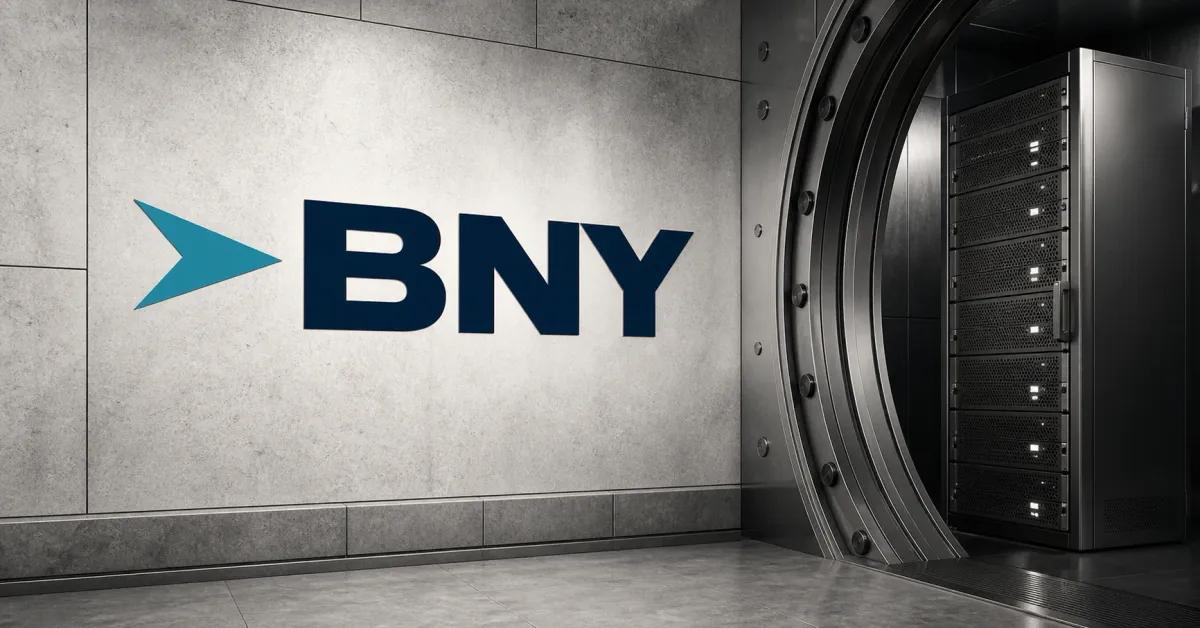
BNY said Monday it will work with Galaxy to add crypto staking to its Digital Asset Custody platform, subject to regulatory review, a move that would place custody and reward-generating proof-of-stake activity in one institutional workflow at a bank overseeing $62.6 trillion in custody or administration assets.
The arrangement joins BNY’s custody, reporting and control framework with Galaxy’s proof-of-stake infrastructure. It does not identify the eligible assets, give a launch date or disclose commercial terms, leaving the practical client rollout dependent on the promised regulatory review.
Bitcoin traded near $63,145 late Monday, down 2.3% over 24 hours and 5.4% over seven days, while its market capitalization stood near $1.27 trillion and 24-hour trading volume was about $25.2 billion, according to CoinGecko. Those figures do not measure proof-of-stake demand, but they frame the risk-sensitive crypto market into which large custodians are extending service lines.
In its announcement, BNY said clients want “more than safekeeping alone” and described the planned service as a broader institutional-grade custody offering. Galaxy said it will supply proof-of-stake expertise and act as a design partner on BNY’s platform infrastructure.
The announcement is more specific than a general custody mandate: it proposes an operating model that keeps staking next to asset safekeeping, fund accounting, tax reporting, payments and client reporting where applicable. It also follows BNY’s recent role in institutional stablecoin infrastructure, including the bank’s support for USDC custody and mint-and-burn services.

Bitcoin
BTCBNY and Galaxy put crypto staking beside custody
Staking is the process of committing eligible crypto assets to help validate transactions on proof-of-stake networks in exchange for protocol rewards. The activity can involve operational, technology, custody and regulatory decisions that are harder for large institutions to handle through separate vendors.
For an allocator, the operational question is not limited to earning a protocol reward. It includes who controls withdrawal credentials, how validators are selected and monitored, what happens when a network penalizes a validator, and how rewards and expenses reach the client record. The announcement does not resolve those questions, but it identifies the bank platform where BNY and Galaxy intend to handle them.
Large institutions often separate safekeeping, trade execution, recordkeeping and network operations among different providers. A custody-plus-staking design could reduce those handoffs for supported assets, though it can also make the precise legal and operating responsibilities of each provider more important. BNY and Galaxy did not publish their custody agreement, service-level terms or risk-allocation documents.
BNY said eligible institutional clients would be able to access staking inside its broader servicing model. Its release lists custody, fund accounting, tax reporting, payments and client reporting as integrated capabilities where applicable, rather than promising a standalone retail-style yield product.
Galaxy’s role is central but bounded. The firm will provide its proof-of-stake network expertise and help design BNY’s digital-asset platform infrastructure, while BNY remains the institution offering the custody framework and client relationship.
That structure resembles the direction of other institutional crypto products, where banks retain the controls surrounding customer assets and specialist firms provide protocol operations. Galaxy has already pursued this infrastructure-focused model through institutional DeFi vaults with Morpho and Fireblocks, although those vaults address onchain lending rather than validator rewards.
The companies did not name the networks or tokens that could be supported. They also did not say whether client assets would be delegated to particular validators, how slashing risk would be allocated or what fees would apply. Those details are material for institutions assessing a staking program and were not immediately disclosed.
BNY’s $62.6T scale raises the institutional stakes
BNY said it had $62.6 trillion in assets under custody or administration and $2.2 trillion in assets under management as of June 30. The figures are for the bank’s whole platform, not a statement about digital-asset balances or assets that will enter the proposed staking service.
Still, the scale distinguishes the announcement from a crypto-native provider adding another validator product. A custody bank can embed digital-asset operations into accounting, tax, reporting and payment processes that institutional clients already use, potentially reducing the number of operational handoffs required to participate in a proof-of-stake network.
The prospective benefit is administrative rather than a promise of higher protocol returns. Asset owners would still need to decide whether a supported network, a specific staking arrangement and the associated liquidity terms fit their mandates. The release offers no minimum allocation, reward-rate estimate or indication that BNY will stake assets on behalf of every custody client.
The deal also adds another data point in a broader competition to make blockchain activity fit existing financial-market controls. Galaxy’s investor materials say its digital-assets platform includes trading, advisory, asset management, staking, self-custody and tokenization, while BNY is positioning custody as the point of integration.
That does not settle the economic or regulatory questions around staking. The announcement explicitly says BNY’s offering and related infrastructure enhancements remain subject to regulatory review. No regulator was named, and neither company described a timeline for approvals or the first client group.
Regulatory review will determine BNY’s staking rollout
The careful phrasing matters because staking can raise separate questions about asset control, validator selection, rewards, reporting and potential losses. A custodial service can simplify those processes for a client without making the underlying network activity risk-free.
BNY said the proposed model is designed to preserve the governance, controls, resiliency and asset protections associated with its custody platform. That is a stated design goal, not an assurance that every asset or network will be offered, and it does not change the risk profile of any protocol reward.
For Galaxy, the collaboration places its staking operations alongside a large traditional-finance distribution and servicing platform. For BNY, it gives the bank a way to test a wider digital-asset service set without presenting custody as an isolated product.
Crypto sentiment remained cautious alongside the announcement. The Crypto Fear and Greed Index registered 25, or Extreme Fear, on Aug. 4. The index is not a gauge of institutional staking demand, but it provides context for the market volatility custody clients are seeking to manage.
Fear & Greed Index
Aug. 4, 2026The next meaningful disclosures will be the assets and networks eligible for the service, its approval status, client availability and the operational terms for rewards and losses. Monday’s announcement establishes the partnership and its intended custody-plus-staking model, but not the timeline or final shape of the offering.
Stay up to date
Get the latest crypto insights delivered to your inbox
Primary sources and further reading
| Source | Title |
|---|---|
| | Galaxy: Galaxy and BNY Collaborate to Advance Digital Asset Infrastructure |
| | Galaxy Digital Investor Relations |
| | CoinGecko: Bitcoin market data |
| | Alternative.me: Crypto Fear and Greed Index |
Fact-checked by: Daily Crypto Briefs Fact-Check Desk
Related Articles





Frequently Asked Questions
What did BNY and Galaxy announce?
BNY said it is working with Galaxy to support staking through BNY's Digital Asset Custody platform. The companies said the offering is subject to regulatory review and would combine custody and staking in one institutional servicing model.
Which cryptocurrencies will BNY support for staking?
The announcement did not name the eligible digital assets or networks. It said eligible institutional clients could access staking through BNY's broader servicing model once the relevant regulatory review and rollout are complete.
Is BNY crypto staking available now?
A launch date was not disclosed. Galaxy and BNY described the staking offering as subject to regulatory review, so the announcement is not a confirmation of immediate availability for every BNY custody client.
Why is Galaxy involved in BNY's staking platform?
Galaxy provides proof-of-stake network expertise and will also serve as a design partner on BNY's digital-asset platform infrastructure. BNY said the arrangement is intended to integrate staking with its custody controls and institutional services.
How large is BNY's custody business?
BNY said it oversaw $62.6 trillion in assets under custody or administration as of June 30, 2026, alongside $2.2 trillion in assets under management. Those figures describe the bank's overall platform, not the amount of crypto assets that will be staked.