 Daily Crypto Briefs




WASHINGTON, June 18, 2026
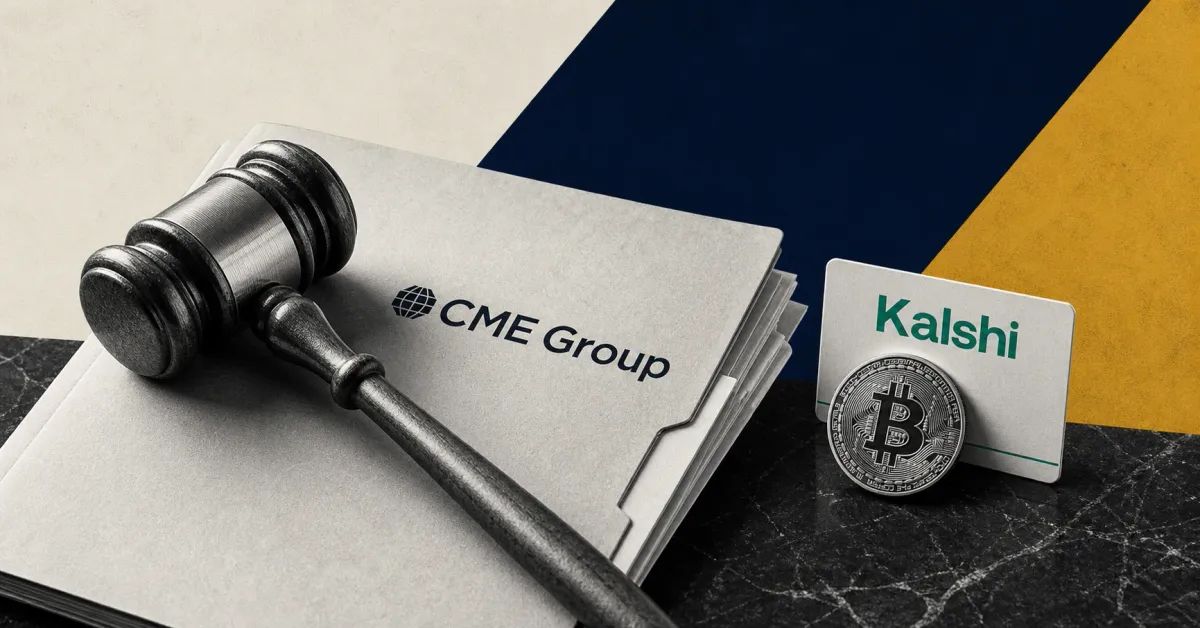
CME Group moved to sue the CFTC over its approval of perpetual futures, escalating a fight over U.S. crypto leverage as bitcoin traded near $62,503 and regulated venues pushed perps onshore.
The lawsuit follows the CFTC’s May approval of Kalshi’s BTCPERP contract, a cash-settled bitcoin perpetual futures product. CME chief executive Terry Duffy had said a day earlier that the exchange operator planned to challenge the regulator because it believes the products are swaps, not futures, CoinDesk reported.
Market snapshot: CoinGecko data showed bitcoin near $62,503 on June 18, down about 18.6% from roughly $76,809 on May 20. The Alternative.me Crypto Fear and Greed Index stood at 15, or Extreme Fear, as traders watched derivatives policy, ETF flows and macro risk.

Bitcoin
BTCIn its approval release, the CFTC said Kalshi’s BTCPERP references the spot price of bitcoin and was approved as a futures contract after agency review. Duffy’s argument, as reported by CoinDesk, is that periodic payment exchanges between counterparties make the structure a swap under Dodd-Frank.
The legal challenge turns the U.S. perp rollout from a product story into a jurisdictional test. If CME is right, crypto perps could face a different registration, clearing and compliance path. If the CFTC’s treatment holds, U.S. derivatives venues have a clearer route to list one of crypto’s most active trading formats.
What remains unknown is the full public complaint and whether CME is seeking immediate injunctive relief. The next filings will show whether the dispute stays focused on Kalshi’s bitcoin product or expands into the broader CFTC policy statement that opened the door to digital-commodity perps.
CME Targets Kalshi Perps
The CFTC approved Kalshi’s BTCPERP on May 29, saying the contract complied with the Commodity Exchange Act and the core principles that apply to designated contract markets. Daily Crypto Briefs covered that approval as the first major onshore bitcoin perp decision.
The product matters because perpetual futures do not expire. Instead, long and short holders exchange funding payments that are meant to keep the contract price tied to the underlying spot market.
That structure made perps the dominant crypto derivatives product offshore. It also made them controversial in Washington because leverage, 24-hour trading and automatic liquidations can turn a spot-market move into forced selling.
Bitcoin Magazine reported that CME later confirmed its litigation plans to Reuters. CME’s challenge suggests the incumbent derivatives exchange sees more than one risk: retail leverage, regulatory interpretation and new competition for always-on markets.
For readers who followed Kraken’s June 15 launch of CFTC-regulated U.S. perps, the CME case is the next stress test. U.S. venues are no longer just asking whether traders want domestic perps. They are asking which legal bucket those perps belong in.
CFTC Case-By-Case Path
The agency did not frame the Kalshi approval as a blanket approval for every perp. In a separate policy statement, the CFTC said perpetual contracts have unique characteristics and should generally be reviewed case by case when they reference assets outside the order.
The CFTC followed that with June 12 no-action relief for designated contract markets seeking to convert existing perpetual-style digital commodity futures into true digital commodity perpetual futures. The relief requires customer-protection steps such as participant feedback, advance notice, exit opportunities and risk disclosures, and it expires on June 30.
Kalshi also moved beyond bitcoin quickly. A June 1 KalshiEX filing self-certified LINKPERP, a Chainlink perpetual futures contract, and said the product would be listed after close of business that day.
That filing described perps as cash-settled futures contracts with no fixed expiration or delivery date, tethered to spot through periodic funding. It also argued that listing domestic perps brings surveillance, know-your-customer checks, risk-based margin, central clearing and disciplinary procedures into a market structure that had been mostly offshore.
CME is now asking the courts to test that logic. The core legal question is not whether crypto traders use perps. It is whether a funding-payment product can be approved as a futures contract instead of being forced into the swaps framework.
Crypto Leverage Fight Moves To Court
For traders, the practical stakes are access and risk controls. A CFTC-regulated perp can put leverage inside a registered venue, but it does not remove the possibility of funding swings, margin calls or liquidations.
That is why our broader futures-risk guide warns that crypto leverage can close positions automatically even when a trader’s long-term market view later proves right. A legal venue can improve supervision and disclosures, but it cannot make a perpetual futures position behave like spot ownership.
Fear & Greed Index
June 18, 2026The competitive stakes are also clear. CME built the regulated U.S. bitcoin futures market in 2017 and has since expanded crypto futures, options and round-the-clock trading plans. Kalshi, Coinbase and Kraken are trying to bring a crypto-native format into the same regulated perimeter.
That makes the case a market-structure fight, not just a lawsuit over one product. If the court narrows the CFTC’s approach, U.S. perp launches could slow or require new registrations. If the agency wins, more crypto and digital-commodity perps may move through the case-by-case process.
The next signals are the complaint, the CFTC’s response, any Kalshi intervention and whether live U.S. perps keep trading while the case proceeds. It was not immediately clear from public materials reviewed by Daily Crypto Briefs whether CME had asked the court for emergency relief.
Stay up to date
Get the latest crypto insights delivered to your inbox
Primary sources and further reading
| Source | Title |
|---|---|
| | CFTC: Approval of Kalshi BTCPERP contract |
| | CFTC: Policy statement on perpetual contracts |
| | CFTC: No-action relief for digital commodity perpetual futures |
| | KalshiEX: LINKPERP self-certification filing |
| | CoinDesk: CME chief says company plans to sue CFTC |
| | Bitcoin Magazine: CME Group to sue CFTC over bitcoin perpetual futures approval |
| | CoinGecko: Bitcoin price |
| | Alternative.me: Crypto Fear and Greed Index |
Fact-checked by: Daily Crypto Briefs Fact-Check Desk
Related Articles



Frequently Asked Questions
Why is CME moving to sue the CFTC over Kalshi?
CME is challenging the CFTC's approval path for perpetual futures, arguing the products should be treated as swaps rather than ordinary futures under Dodd-Frank.
What are Kalshi bitcoin perpetual futures?
Kalshi's BTCPERP is a cash-settled bitcoin perpetual futures contract approved by the CFTC on May 29, 2026. It references the spot price of bitcoin and has no fixed expiration date.
What is the difference between a crypto perp and a standard futures contract?
A standard futures contract expires on a set date. A perpetual futures contract has no fixed expiration and uses funding payments to keep the contract price close to spot.
Does the CME lawsuit stop every U.S. crypto perpetual futures product?
No immediate market-wide halt was disclosed. The case targets the CFTC's approval treatment and could affect how Kalshi, Coinbase, Kraken and other regulated venues structure future perps.
What should traders watch next?
The next catalysts are the public complaint, any request for a court order, CFTC or Kalshi responses, and whether listed U.S. crypto perps continue gaining liquidity.