 Daily Crypto Briefs




NEW YORK, July 20, 2026
Kraken Institutional has partnered with Upshift to offer eligible clients custom, permissioned onchain yield vaults through Kraken’s qualified-custody service, combining a recognizable custody relationship with strategies that had often required separate wallets and providers.
The July 15 announcement puts Kraken in a growing contest to bring DeFi yield products into institutional operating models. It does not promise a fixed return or disclose which clients have enrolled, but it lays out a custody-and-vault structure that may appeal to firms seeking onchain exposure without moving assets into a wholly separate workflow.
The market backdrop remained uneven. Kraken’s Bitcoin price page showed BTC near $64,573 on July 20, about 10.3% above its roughly $58,519 level on June 30 and 0.4% below the $64,831 recorded on July 15. Those moves do not establish demand for Kraken’s service, but they show the product is arriving while institutions weigh returns against price volatility and counterparty risk.
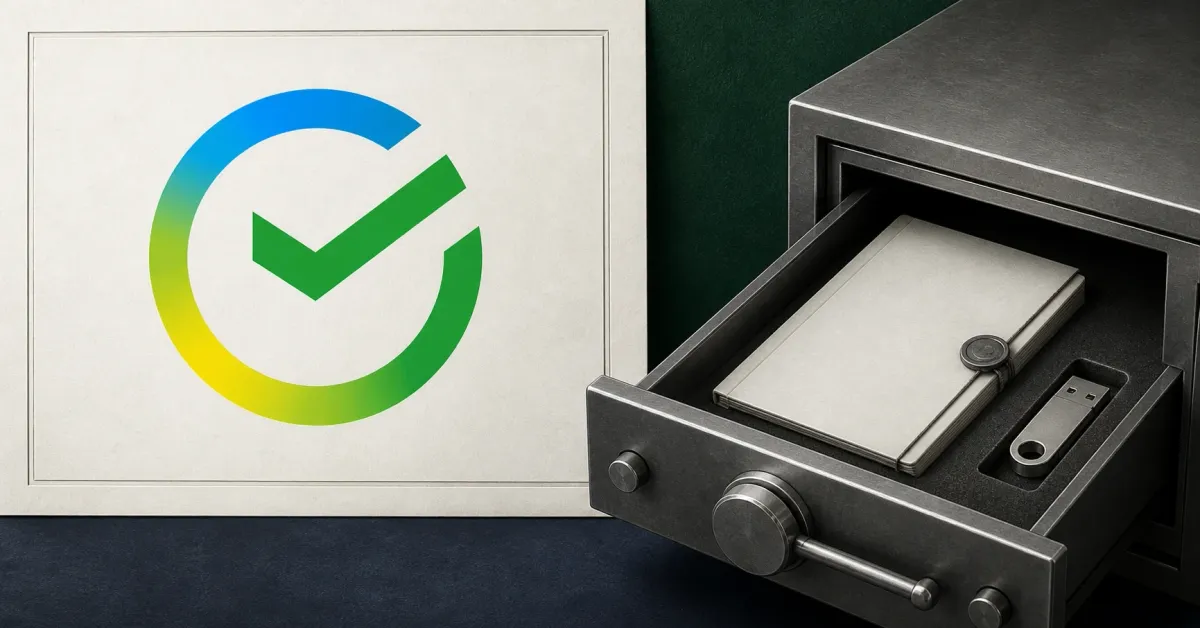
Kraken said in its official announcement that eligible clients can deploy assets into vetted onchain yield strategies without opening separate wallets or onboarding another provider. The exchange said the positions are represented by receipt tokens held in segregated Kraken custody and are valued at their redeemable amount.
The offering follows other efforts to package onchain activity for professional investors. Kraken’s BTC and ETH options launch addressed derivatives access, while its new vault arrangement concentrates on the custody, allocation and reporting layers around yield strategies.

Bitcoin
BTCKraken Puts Upshift Vaults Inside Qualified Custody
Kraken said the vaults are permissioned and custom, rather than a single pooled product offered on identical terms to every participant. Upshift supplies the multi-chain, multi-protocol vault infrastructure, while Kraken provides the qualified-custody relationship and access point for the client.
That division is important for a market in which custody, strategy selection and execution frequently sit with different firms. Kraken said the integration combines custody, prime brokerage, liquidity, execution and access to onchain yield under one institutional relationship.
The company said clients can use curated strategies directly through the Kraken Institutional experience. Its announcement did not identify the protocols available to every client, name an initial asset universe, provide yield targets or state a jurisdiction-by-jurisdiction availability schedule.
Those omissions leave the central investment questions unresolved. A vault’s realized return depends on the underlying strategy, trading and lending conditions, smart-contract exposures, fees and the terms agreed with a client, not simply on whether it is accessed through a custodian.
The design also differs from a basic exchange savings product. Kraken says the receipt tokens remain in segregated custody, are valued at redeemable amount, and do not involve pooling or rehypothecation. That describes the operating structure, not a guarantee against protocol, liquidity or market losses.
In practice, a permissioned vault can give an institution a narrower set of approved strategies and counterparties than an open DeFi interface. That may simplify controls and audit trails, but it can also limit choice and make the manager’s due-diligence process more important. Kraken did not say whether clients can independently withdraw a position to an external address while a strategy remains active, or how rapidly a redemption request is expected to settle under stressed market conditions.
Segregated Receipt Tokens Shape the Risk Discussion
For institutions, the practical attraction is less about a headline yield than about controls. Separate wallets, multiple counterparties and manual reporting can make even a vetted onchain strategy difficult for a treasury or fund to supervise. Kraken’s model is intended to reduce that operational gap.
The arrangement is part of a broader move to turn blockchain access into a custody-led service. Daily Crypto Briefs recently reported on Galaxy, Morpho and Fireblocks’ institutional vaults, another example of firms trying to connect decentralized protocols with institutional controls.
Segregation does not eliminate the underlying risks. A receipt token can record a client’s claim on a position, but a strategy can still face smart-contract vulnerabilities, liquidity constraints, oracle problems or losses in the assets it holds. Kraken did not publish product-specific stress tests or risk limits in the announcement.
The same qualification applies to the word “vetted.” Kraken said the strategies would be vetted, but did not detail the screening methodology, the frequency of review or the circumstances in which a strategy could be suspended. Firms evaluating the product will need those operational details alongside any performance figures.
The announcement also does not identify whether collateral can be reused within a strategy, what reporting clients receive, or whether a client can set asset, protocol and counterparty limits at the mandate level. Those questions are routine for an investment committee, especially where digital-asset risk is being folded into an existing custody policy rather than run by a standalone crypto desk.
Kraken’s Vault Rollout Leaves Yield and Access Open
Upshift raised a $10 million Series A led by Dragonfly in March 2025, according to Kraken’s announcement, giving the new arrangement a defined infrastructure provider rather than an in-house vault stack. Kraken did not say whether clients will be able to choose among standardized strategies, negotiate bespoke mandates, or do both.
The launch lands as exchanges expand beyond trading screens into the systems around margin, custody and settlement. Kraken’s earlier xStocks collateral expansion likewise centered on how assets can be used in a trading workflow rather than on a new token issuance.
For Kraken, the test is whether a single custody relationship can make onchain yield usable enough for professional firms without obscuring the risks of the underlying protocols. For clients, the relevant evidence will be custody terms, strategy disclosures, redemption mechanics, fees and the actual performance after deployment.
Market sentiment remained cautious. The Crypto Fear and Greed Index was at 25, classified as Extreme Fear, on July 20. The index is a broad sentiment gauge and does not measure demand for Kraken’s vaults specifically.
Fear & Greed Index
July 20, 2026Kraken has not announced client names, a public yield schedule or a retail version of the service. The next disclosures to watch are the supported assets and protocols, availability by jurisdiction, and whether early clients can show that the added custody layer improves operations without adding unexpected friction or risk.
Stay up to date
Get the latest crypto insights delivered to your inbox
Primary sources and further reading
| Source | Title |
|---|---|
| | Kraken Institutional: Upshift custom vaults announcement |
| | Upshift |
| | Kraken: Bitcoin price data |
Fact-checked by: Daily Crypto Briefs Fact-Check Desk
Related Articles

Frequently Asked Questions
What did Kraken Institutional launch with Upshift?
Kraken Institutional said it partnered with Upshift to offer permissioned, custom onchain yield vaults through Kraken's qualified custody service for eligible institutional clients.
Do Kraken's institutional vaults pool client assets?
Kraken said positions are represented by receipt tokens held in segregated custody and that the service does not use pooling or rehypothecation.
Which assets can institutions use in Kraken's custom vaults?
Kraken did not publish a complete asset list, yield table or allocation list in the announcement. The service is designed for curated onchain strategies selected for eligible clients.
Can retail Kraken users access the Upshift institutional vaults?
The announcement describes the product as a Kraken Institutional service for eligible clients. Kraken did not announce a retail rollout in that release.