 Daily Crypto Briefs
WASHINGTON, March 30, 2026
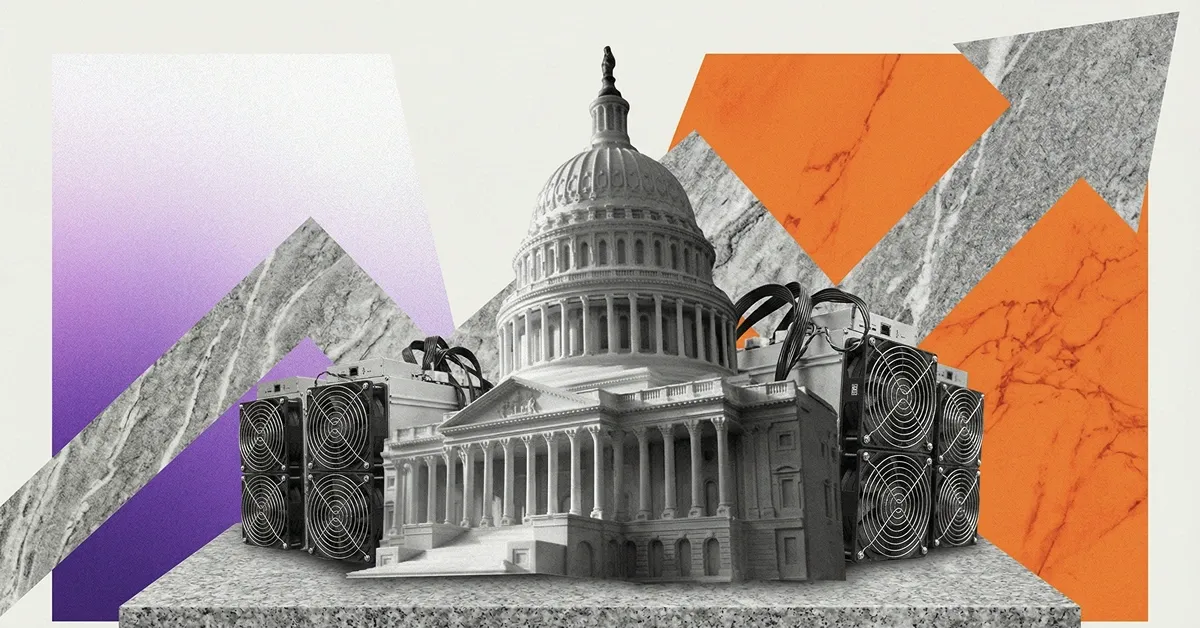
Senators Bill Cassidy and Cynthia Lummis introduced the Mined in America Act on March 30, a bitcoin mining bill that would create a voluntary U.S. certification program, push certified operators away from adversary-linked hardware, and write President Donald Trump’s Strategic Bitcoin Reserve into statute as bitcoin traded near $66,600 and crypto sentiment stayed in Extreme Fear.
In plain terms, the proposal tries to keep more mining infrastructure, hardware development, and reserve policy inside U.S. institutions. Backers are presenting it as a supply-chain and energy bill as much as a crypto bill, because the United States leads global mining output while still relying heavily on Chinese-made ASIC machines.
Bitcoin price slips as fear stays extreme
Market snapshot: Price trackers showed bitcoin near $66,598 late on March 30, down about 11.0% from roughly $74,858 on March 17 and off about 6.3% over seven days. Twenty-four-hour volume was near $38.9 billion, while the Crypto Fear & Greed Index printed 8, a level labeled Extreme Fear.
The price weakness matters because this bill is being sold into a market that is still trading defensively. That makes the article’s core question more interesting: is Washington only trying to regulate bitcoin more tightly, or is it starting to treat mining as infrastructure worth anchoring inside the United States?
Bitcoin (BTC) - 2-week snapshot
BTCFear & Greed Index
The bill starts with a Chinese hardware problem
The pitch from supporters starts with a vulnerability they say has been ignored for too long: America may host the largest share of global bitcoin mining, but the machines doing that work are still overwhelmingly designed and assembled abroad. The outline circulated by backers says certified facilities and pools would have to phase out hardware tied to foreign adversaries over time, while NIST and manufacturing-support programs would help domestic vendors build more energy-efficient machines.
That structure lets sponsors sell bitcoin mining as industrial policy rather than a narrow crypto carveout. Supporters say the United States controls roughly 38% of global hashrate, but they also argue the hardware stack remains deeply exposed to Chinese manufacturers, making supply chains and cybersecurity part of the same debate as reserve policy.
Backers also point to a longer history of hardware risk. The 2017 Antbleed episode showed how a firmware-level vulnerability could threaten mining uptime at scale, and recent customs scrutiny around ASIC imports has kept hardware concentration in view. Even if the exact share of China-linked hardware in the U.S. fleet is hard to verify from public federal datasets, the political argument is straightforward: if America wants mining leadership, it does not want the physical machines sitting downstream from a geopolitical rival.
That framing also lands against a harder China policy backdrop. In our recent piece on Beijing’s foreign-exchange and RMB stablecoin pressure, the direction of travel was still toward tighter control, not a reopening, which makes U.S. efforts to reshore mining hardware easier to sell politically.
If the bill advances, miners would have a clearer incentive to source hardware, capital, and treasury strategy domestically. That would matter beyond mining operators, because reserve policy, energy policy, and manufacturing policy would start shaping bitcoin’s supply infrastructure in the same headline cycle.
Supporters are selling miners as a grid tool, not just an energy load
The next section of the case is energy. Supporters argue the grid does not just need more generation. It also needs more flexible demand that can absorb surplus electricity when it is abundant and disappear quickly when the system is under stress.
That claim has an official policy backdrop. FERC Order No. 2222 was designed to remove barriers preventing distributed energy resources from participating in organized wholesale markets, and the Department of Energy’s virtual power plant work says deploying 80 GW to 160 GW of VPP capacity by 2030 could address 10% to 20% of peak load while reducing grid costs.
Supporters are trying to slot bitcoin mining into that logic. They say miners are one of the few large electrical loads that can shut down in seconds, which is why Texas has become the template for this argument. The same stress logic showed up in our look at the winter-storm hashrate shock, where a U.S.-centric power event rapidly changed mining output and block production.
The California side of the story is the mirror image. CAISO has repeatedly said midday oversupply continues to force renewable curtailment as solar and wind output outpaces demand during certain hours. Backers of the bill are using that broader trend to argue that bitcoin mining can act as a buyer of otherwise stranded energy rather than just another drain on the system.
The methane section is where the environmental pitch gets sharper
The bill’s backers are also making a more ambitious climate argument. Instead of treating mining as automatically dirty, they are pointing to landfill gas, stranded natural gas, and other methane-heavy energy streams where an always-on buyer can improve the economics of capture and on-site generation.
That claim does have support in federal climate language. In the White House OSTP’s September 2022 crypto-assets climate report page, the administration said crypto-asset mining operations that capture vented methane to produce electricity “can yield positive results for the climate.” That does not amount to a blanket federal endorsement of mining, but it does give backers a primary-source opening for the methane argument.
The political value of that section is obvious. If sponsors can frame miners not only as flexible load, but also as a tool that helps finance methane destruction and rural energy buildout, the bill becomes easier to sell outside the usual bitcoin audience. That is also why supporters keep describing miners as energy-development infrastructure that can show up where a traditional industrial buyer will not.
The reserve section turns mining into strategic policy
The reserve piece is the clearest part of the proposal already grounded in official federal policy. In the March 6, 2025 executive order, the White House said government BTC in the reserve “shall not be sold” and should be maintained as reserve assets, while a later White House digital-assets report said Treasury and Commerce should explore budget-neutral ways to acquire more bitcoin.
This bill tries to move that framework out of executive-action territory and into statute. That matters because executive orders can be reversed by a later administration, while legislation is harder to unwind. It also matters because the bill does not stop at codifying the reserve. Backers say certified miners would gain a direct policy role in feeding that reserve through a budget-neutral acquisition pathway tied to assets the government already controls.
That is where the story shifts from mining economics to statecraft. A mining bill that also touches Treasury accumulation, forfeited assets, and domestic hardware sourcing is no longer just about data centers. It becomes part of a larger contest over whether the United States wants bitcoin to sit at the edge of policy or closer to the center of strategic planning.
Why supporters think the bill can travel beyond crypto
The reason the Mined in America Act is being marketed so aggressively is that it touches multiple constituencies at once. For energy policymakers, it offers a flexible-load and curtailment story. For climate-focused readers, it offers a methane-capture and stranded-energy story. For manufacturing hawks, it offers a China-supply-chain story. For fiscal conservatives, it is being framed as a no-new-spending attempt to turn existing government assets into a reserve strategy.
That is also why the bill is a useful marker in the broader regulatory story. As our U.S. crypto regulation guide shows, Washington is no longer approaching digital assets through one narrow lens. Mining, custody, market structure, sanctions, tax reporting, and reserve policy are starting to overlap, and this bill is an unusually direct example of that convergence.
What remains unclear is how quickly the bill will move through committee, when full legislative text will be broadly available on congressional trackers, and how much support the certification framework can attract from miners, manufacturers, and energy developers. Until those answers appear, the proposal will be judged less on the slogan and more on whether it can turn a bold narrative into a durable legislative coalition.
Stay up to date
Get the latest crypto insights delivered to your inbox
Primary sources and further reading
| Source | Title |
|---|---|
| | The White House: Establishment of the Strategic Bitcoin Reserve and United States Digital Asset Stockpile |
| | The White House: Strengthening American Leadership in Digital Financial Technology |
| | Department of Energy: Pathways to Commercial Liftoff for Virtual Power Plants |
| | Federal Energy Regulatory Commission: Order No. 2222 Fact Sheet PDF |
| | Archived White House OSTP page for Climate and Energy Implications of Crypto-Assets in the United States |
| | CoinMarketCap: Bitcoin |
| | Alternative.me: Crypto Fear & Greed Index |
Fact-checked by: Daily Crypto Briefs Fact-Check Desk
Frequently Asked Questions
What is the Mined in America Act?
It is a U.S. Senate bitcoin mining proposal that would create a voluntary certification program for mining operations, phase certified operators away from adversary-linked hardware, and put the Strategic Bitcoin Reserve into statute.
Does the bill immediately ban Chinese mining hardware?
No immediate nationwide ban was disclosed in the materials reviewed for this article. The proposal is described as a phased transition for certified operations rather than an overnight cutoff.
Why are supporters talking so much about the power grid?
Backers are framing bitcoin mining as flexible electricity demand that can absorb surplus power and curtail quickly during grid stress, which they argue makes miners useful for reliability and renewable integration.
How does methane fit into the bill's pitch?
Supporters argue that miners can help monetize landfill gas, stranded natural gas, and other methane-heavy energy streams, improving the economics of capture projects that might not otherwise be built.
How does the bill connect to the Strategic Bitcoin Reserve?
It would formalize in statute the reserve policy that President Donald Trump set by executive order in March 2025, instead of leaving that framework only at the executive-action level.
What does a Fear and Greed Index reading of 8 mean?
A reading of 8 is labeled Extreme Fear, signaling very weak risk appetite even if policy headlines remain constructive for bitcoin over a longer horizon.