 Daily Crypto Briefs




LONDON, July 7, 2026
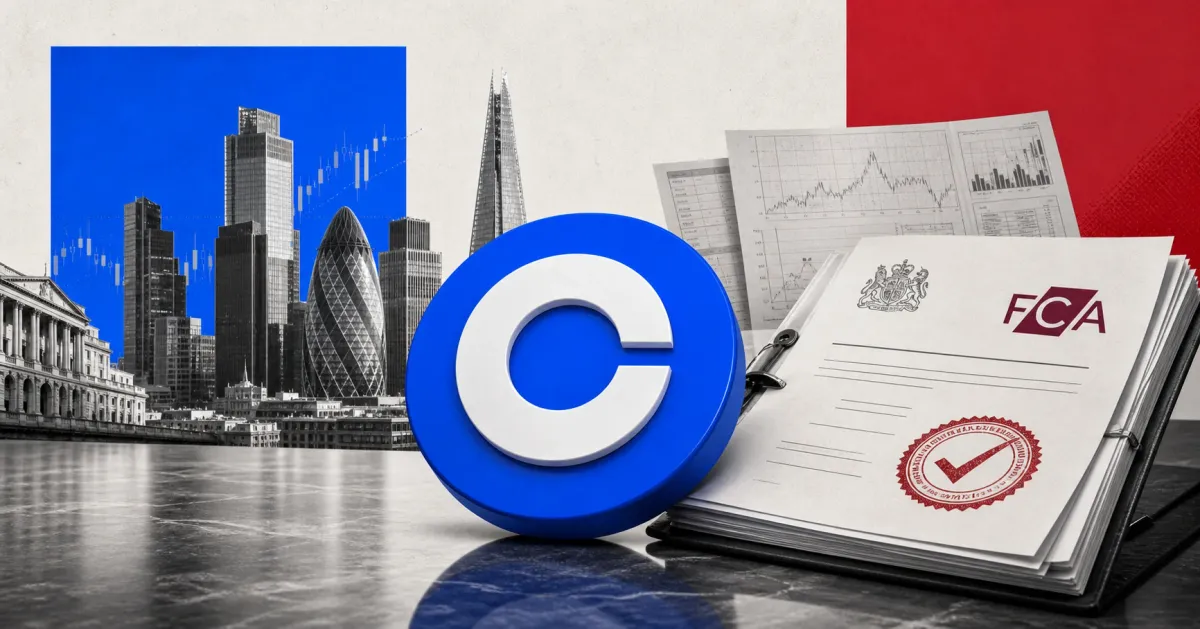
Coinbase said it obtained a UK MiFID license that will let UK users trade derivatives and equities alongside crypto, expanding its regulated British product lane as bitcoin traded near $63,545.
The authorization gives Coinbase another route into mainstream financial products in one of Europe’s most closely watched crypto markets. It also lands as UK regulators are trying to pull more crypto activity into supervised channels without giving retail investors unrestricted access to high-risk products.
Market data gave the announcement a mixed backdrop. Bitcoin was at about $63,545 on July 7, up roughly 2.3% from the prior close, according to market data reviewed for this article. Coinbase shares traded near $168.87, valuing the company at about $44.7 billion, while the company said more than 7 million UK adults already hold crypto.

Bitcoin
BTCCoinbase said the license means UK users will be able to trade “derivatives and equities alongside crypto.” It said institutional and advanced traders will gain access to crypto, equity and commodity perpetual futures, while retail users will be able to trade equities on Coinbase for the first time.
The move follows Coinbase’s push for regulated finance wrappers in other markets. Daily Crypto Briefs previously covered Coinbase’s conditional U.S. national trust approval, which showed the company trying to sit closer to bank-style custody and institutional infrastructure in the United States.
The practical effect in Britain is still limited by execution. Coinbase did not immediately disclose final launch dates, fee schedules, margin terms, product-by-product eligibility, or how the offering will handle leverage and risk disclosures.
Coinbase UK MiFID License Opens Multi-Asset Lane
MiFID is the European-style rulebook for investment services, and the UK kept a version of that framework after Brexit. For Coinbase, the important point is that derivatives, equities and commodities-linked products are not the same regulatory category as spot crypto buying and selling.
That distinction matters because the fastest-growing exchange products often sit outside simple spot trading. Futures, options, tokenized equity access, structured yield and commodities-linked contracts require permissions, disclosures, suitability checks and supervision that ordinary crypto registration does not automatically provide.
The new UK license therefore gives Coinbase a broader product perimeter. It can now talk about crypto derivatives and equities inside a regulated investment-services frame, rather than only as an offshore or non-UK venue story.
The company already has a large UK footprint. Coinbase said its UK entity now sits alongside its e-money license and crypto registration, and the number of UK adults holding crypto makes the country a major battleground for regulated distribution.
Still, a license is not a product sheet. If Coinbase launches high-risk derivatives, regulators will look closely at marketing, leverage limits, appropriateness tests and whether customers understand that losses can move faster than spot-asset price charts.
UK Crypto Rules Are Moving Faster
The timing is important because the UK is not just approving firms one at a time. The FCA’s cryptoasset firm guidance and broader consultation work show a regulator trying to formalize crypto activity after years of fragmented oversight.
Last month, Daily Crypto Briefs covered the FCA proposal to let certain authorized funds hold crypto ETNs up to 10% of scheme property. That consultation did not open the door to direct bitcoin or ether holdings by retail funds, but it did show the FCA is willing to permit capped exposure inside regulated wrappers.
The Coinbase license sits in the same direction of travel. Rather than leaving UK users to search offshore venues for derivatives or tokenized exposure, the regulator can let authorized firms offer products under UK conduct rules before the full crypto regime expected in October 2027.
That does not make the UK a free-for-all. The FCA has repeatedly warned that crypto remains high risk, and its retail approach is still more cautious than the U.S. spot ETF model. The difference now is that the UK is creating more defined lanes for firms that meet authorization and disclosure requirements.
The same theme is visible in tokenized markets. U.S. regulators are also reconsidering old securities-market rules as tokenized stocks move closer to mainstream finance, an issue Daily Crypto Briefs tracked in the SEC Rule 611 tokenized-stock proposal.
Derivatives Push Still Needs Product Details
The strongest commercial angle is derivatives. Crypto exchanges make more money when users trade complex products, hedge, borrow, or rotate between spot and structured exposure. For Coinbase, a UK license could help it compete with offshore venues that already dominate global crypto leverage.
There is also an equities angle. Coinbase’s announcement explicitly mentioned equities, which keeps the company close to the tokenized-stock and multi-asset trading race even if it has not yet disclosed a UK tokenized-equities product.
Investors should separate the authorization from revenue impact. Coinbase’s next earnings materials will matter more than the announcement language because they can show whether international product launches are improving transaction revenue, subscription revenue, or institutional activity.
Sentiment around crypto remains cautious.
Fear & Greed Index
July 7, 2026The license gives Coinbase a clearer UK platform for expansion, but it does not remove product risk, regulatory scrutiny or market-cycle pressure. If bitcoin liquidity weakens or derivatives demand stays concentrated offshore, the authorization may take time to show up in volumes.
The next watch items are product launch dates, customer eligibility, leverage limits, and whether Coinbase uses the UK license for crypto-only derivatives or a broader multi-asset push. Until those details are public, the announcement is best read as a regulatory beachhead rather than a completed revenue story.
Stay up to date
Get the latest crypto insights delivered to your inbox
Primary sources and further reading
| Source | Title |
|---|---|
| | Coinbase: Coinbase obtains MiFID license in the United Kingdom |
| | FCA: Cryptoassets information for firms |
| | FCA: CP26/17 quarterly consultation paper No. 52 |
| | Coinbase Investor Relations: quarterly results |
| | CoinGecko: Bitcoin price |
| | Alternative.me: Crypto Fear and Greed Index |
Fact-checked by: Daily Crypto Briefs Fact-Check Desk
Related Articles





Frequently Asked Questions
What did Coinbase announce in the UK?
Coinbase said it obtained a UK MiFID license that will let UK users trade derivatives and equities alongside crypto.
Does the Coinbase UK MiFID license mean products are live today?
No. Coinbase announced the authorization, but it did not disclose launch dates, product menus, pricing or customer eligibility rules.
Why does a MiFID license matter for Coinbase?
MiFID authorization gives Coinbase a regulated route for investment products in a major financial market, including derivatives and securities-linked products that require more formal permissions than spot crypto trading.
How does this fit with UK crypto regulation?
The license comes as the FCA is consulting on crypto rules, reopening limited retail crypto ETN access and moving more digital-asset activity into regulated channels.
Is Coinbase now a UK bank?
No. The MiFID license is an investment-services authorization, not a banking charter or deposit-taking license.