 Daily Crypto Briefs




NEW YORK, July 3, 2026
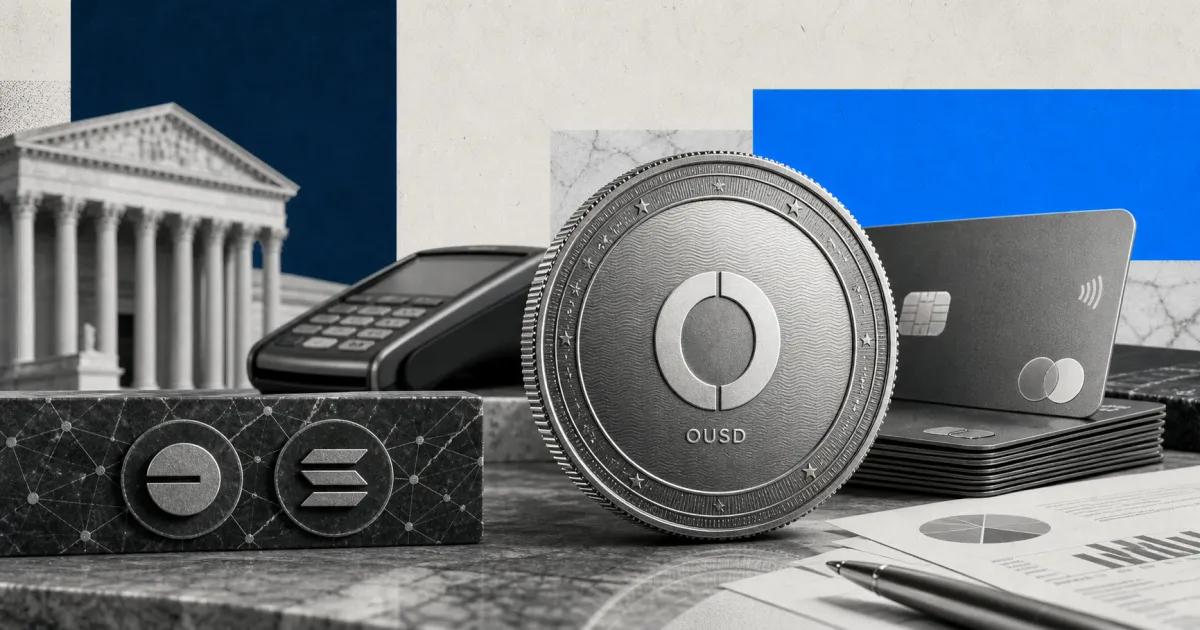
Open Standard’s Open USD stablecoin has lined up more than 140 companies before launch, putting Circle’s USDC model under fresh pressure as the broader stablecoin market sits near $311 billion.
The planned token, also called OUSD, is a dollar stablecoin built for businesses that move money across payments, trading, wallets, banking and internet platforms. It is not live yet, but the partner list already includes Visa, Stripe, Mastercard, American Express, Coinbase, BlackRock, Google, Shopify, Solana, Base, Ripple, BNY and Standard Chartered.
Market reaction showed why the announcement landed beyond crypto circles. DefiLlama’s stablecoin dashboard showed total stablecoin market capitalization near $311.3 billion, while Circle’s own Q1 2026 results said total revenue and reserve income rose 20% to $694 million, with USDC in circulation at $77.0 billion at quarter-end.
Open Standard said businesses can mint and redeem Open USD at no cost and with no artificial limits on volume. The group also said partners will receive reserve earnings after a small management fee, a structure that directly targets the economics that made stablecoin issuance valuable for incumbents.
Zach Abrams, Open Standard’s founding CEO, said the project brings together more than 140 businesses to launch a stablecoin “built for the internet economy.” That is the central pitch: not another dollar token for traders, but a shared settlement asset governed and distributed by the companies expected to use it.
The move follows a month of bank-led stablecoin infrastructure. Daily Crypto Briefs reported this week that Standard Chartered put USDC minting and redemption inside a global bank, while Open USD asks a different question: whether the distributors of stablecoins can take more of the economics from the issuers.
The immediate implication is margin pressure. Open USD has not proven liquidity, reserves, attestations or redemption performance, but it tells payment firms, fintechs and exchanges that stablecoin economics may be negotiable before volume even migrates.
What remains unknown is launch timing, final chain coverage, reserve managers, attestation cadence, contract addresses and whether the partner logos become recurring settlement flow. Open Standard only said Open USD will launch later this year.
Stablecoins
USDOpen USD Shares Reserve Earnings
The sharpest Open USD feature is not the ticker. It is the revenue model.
Open Standard’s FAQ says OUSD is designed to return most revenue generated from reserves to participants who adopt and distribute it, after a small management fee. It also says participants gain technical documentation, integration support and an opportunity to earn revenue based on usage.
That structure flips the usual issuer relationship. Instead of a payment company or exchange merely distributing a stablecoin while the issuer captures most reserve income, Open USD promises to share those economics with the businesses that drive adoption.
The appeal is clear for companies that already own customer interfaces. Card networks, merchants, remittance firms, wallets and exchanges can ask why they should move billions of dollars through a token if most of the reserve spread stays somewhere else.
Open Standard also says OUSD will have no mint or redemption fees, even at scale. That matters because institutional users care about all-in movement cost, not just whether the token holds a dollar peg.
The governance pitch is similar. Open USD will be operated by Open Standard, an independent company with a board made up of partners, according to the announcement. That is meant to reduce single-issuer control, though the exact voting structure and conflict-management process were not immediately disclosed.
There is still a gap between design and production. The announcement did not publish reserve asset allocations, bank names, attestation providers, redemption windows or smart-contract addresses. Those details will decide whether OUSD can meet the same trust bar that institutions expect from existing dollar tokens.
Circle’s USDC Moat Gets Tested
Circle remains the most direct public-market reference point because USDC is already large, regulated and deeply integrated. Circle’s USDC page showed $73.7 billion in circulation as of June 29, and said USDC is fully backed by cash and cash-equivalent assets.
That scale is Open USD’s hurdle. A stablecoin is not only a product launch. It is a network of exchanges, wallets, payment flows, onchain liquidity, issuer controls, compliance systems and user habits that compound over years.
But Circle’s revenue model makes the challenge sensitive. The company reported $694 million in Q1 total revenue and reserve income, while its filing materials have long described reserve income as a function of USDC in circulation and reserve return rates. If partners can direct flow to a token that shares reserve earnings, Circle may face more pressure on distribution terms.
CoinDesk reported that Jefferies warned against buying the Circle dip after Open USD, citing competition from banks, payment firms and fintechs. The report said analysts viewed Coinbase’s participation as a risk because Coinbase has been one of Circle’s most important distribution partners.
That does not mean Coinbase is leaving USDC. The Open Standard announcement itself included Coinbase as a participant and quoted Coinbase chief business officer Shan Aggarwal saying the company is committed to giving customers access to options including Open USD and beyond.
The stronger reading is that large distributors want optionality. Coinbase, Stripe, Visa and Mastercard can support multiple dollar tokens if each one serves a different commercial lane, and that can weaken the old assumption that USDC alone owns regulated U.S. stablecoin distribution.
Daily Crypto Briefs has tracked this same pressure from the payments side. Mastercard’s stablecoin settlement expansion showed payment networks adding several regulated tokens rather than choosing one, and Visa’s private stablecoin settlement test pointed to a similar multi-rail future.
Stablecoin Race Moves To Partners
Open USD’s partner list is unusually broad. It includes payment networks, banks, fintech apps, crypto exchanges, infrastructure firms, merchants and blockchain ecosystems.
That breadth is the SERP hook and the market question. A token backed by Stripe, Visa, Mastercard, Coinbase, BlackRock and Google looks powerful on paper, but stablecoin markets usually reward actual liquidity and redemption confidence over logo density.
The comparison is Global Dollar, or USDG. CoinDesk noted this week that USDG has grown to roughly $3 billion in supply since its late-2024 launch, far behind USDC and Tether’s USDT. That shows the risk for any consortium-backed token: shared economics help, but they do not automatically create dominant balances.
Open USD may still have a cleaner commercial angle than prior challengers because it is being pitched directly at companies moving money. Open Standard lists use cases across financial institutions, payment service providers, card issuers, merchants, fintechs, exchanges, marketplaces and agentic commerce.
That puts the announcement beside the growing x402 and AI-payments story. Daily Crypto Briefs’ x402 implementation guide explains how stablecoins can become an API payment rail, while OUSD is trying to make the underlying dollar token more attractive to the companies that would embed those rails.
Regulation is the other timing factor. U.S. stablecoin rules have pushed issuers toward clearer backing and supervision, while banks and asset managers are racing to own the reserve layer. State Street’s stablecoin reserve fund showed how the cash behind tokens has become a business line of its own.
Crypto sentiment remains weak even as stablecoin infrastructure expands.
Fear & Greed Index
July 3, 2026The next checkpoints are concrete. Watch for Open Standard to publish reserve partners, attestations, supported chains, mint and redeem documentation, launch-region restrictions and the first partners that route real volume through OUSD. Until then, Open USD is a serious threat to stablecoin economics, but not yet a proven threat to USDC liquidity.
Stay up to date
Get the latest crypto insights delivered to your inbox
Primary sources and further reading
| Source | Title |
|---|---|
| | Open Standard: Introducing Open USD |
| | Open Standard: Open USD overview and FAQ |
| | Circle: Q1 2026 results |
| | Circle: USDC circulation and reserve information |
| | DefiLlama: Stablecoin market capitalization |
| | CoinDesk: Jefferies warns on Circle after Open USD |
| | Alternative.me: Crypto Fear and Greed Index |
Fact-checked by: Daily Crypto Briefs Fact-Check Desk
Related Articles


Frequently Asked Questions
What is Open USD?
Open USD, or OUSD, is a planned dollar stablecoin from Open Standard that is designed as shared payments infrastructure for businesses.
Who is backing Open USD?
Open Standard listed more than 140 signed-up companies, including Visa, Stripe, Mastercard, Coinbase, BlackRock, Google, Shopify, Solana, Base and many banks, fintechs and crypto firms.
How does Open USD differ from USDC?
Open Standard says Open USD will let businesses mint and redeem at no cost and receive most reserve earnings, while USDC is issued by Circle and supports Circle's reserve-income business model.
Is Open USD live now?
No. Open Standard said Open USD will launch later in 2026, so reserves, attestations, contract addresses and real transaction volume are still pending.
Why did Open USD pressure Circle?
Circle depends heavily on USDC reserve income, and Open USD's partner-revenue model targets the same economics that make stablecoin issuance attractive.